
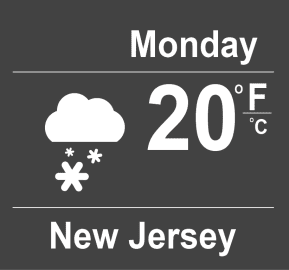
If you live in Teaneck or elsewhere in New Jersey, then you are no stranger to snow. In fact, according to records maintained by the Office of the New Jersey Climatologist at Rutgers University, a March snowstorm last year dumped between five and nine inches on the Garden State in just a single day.
As a New Jersey resident, you should also know that snow and ice can lead to car accidents. This is because driving in wintry weather conditions can be difficult and dangerous — even for those who have extensive experience doing so.
Snow can make roads slick and slippery, which in turn, can:
- Reduce the amount of control that drivers have over their vehicles
- Increase the distance required to bring a vehicle to a stop
- Force drivers to exercise certain driving skills that are not normally used on dry roads
For these reasons, there is an increased likelihood that drivers who travel during snowy or icy conditions will be involved in a car accident.
While it is impossible to prevent all winter car accidents, New Jersey drivers can employ several safe winter driving tips in order to decrease the risk of a winter collision and remain safe on the road during the coming months.
New Jersey Winter Car Accident Statistics
According to data from the New Jersey State Police, 188 of the 646 fatal crashes statewide in one recent year occurred during the winter months of December through March. Overall, six fatal accidents happened in the snow, four occurred in fog, and 52 happened in the rain. Many more serious injury crashes occurred in those conditions.
Looking at the nationwide picture helps illustrate the dangers of winter driving and the toll these crashes cause. According to the U.S. Department of Transportation’s Road Weather Management Program, more than 1,300 people are killed, and another almost 117,000 are injured annually because of snowy, icy, or slushy road conditions.
Preparing Your Vehicle for Winter Driving To Avoid Accidents
One key to staying safe on the roads this winter is to make sure your vehicle is in peak condition. Before heavy snows fall, and roads become difficult to travel on, take the time to ensure your vehicle is ready to handle snowy and icy conditions by following these tips from the Occupational Safety and Health Administration (OSHA):
Get your car checked.
Take your car to a certified, trusted mechanic and have your car tuned-up and checked out for winter driving. Your mechanic should ensure that your tires, brakes and windshield wipers are in good, working order. Your mechanic should check the fluid levels in your vehicle.
Learn about your brakes.
Familiarize yourself with whether your car has antilock brakes and how to properly use your brakes to stop in an emergency. Most new cars have antilock brakes. They do not need to be pumped in order to stop the car. Instead, a driver simply “stomps” on the brakes forcefully in order to stop the car. If your car does not have antilock brakes, you must quickly “pump” the brakes to stop the car. If you are not sure what type of brakes you have, ask your mechanic or consult your car’s owner’s guide.
Put an emergency kit into your car.
In case you become stranded during a snowstorm or blizzard, you will want an emergency kit. The kit should include blankets, jumper cables, flares or other emergency signaling devices. It should also have a flashlight. If you plan on taking a longer trip, and snow is expected, you should also pack extra medication if anyone in your traveling party takes prescription medications, a fully-charged cell phone, food and water.
Keep your fuel tank at least half-full at all times.
When a fuel tank is near empty, condensation can form and, in the winter, it can freeze. The ice can clog your fuel lines and prevent your car from running.
Be mindful of the weather.
This is especially true when your plans require extensive travel. Tune in to local weather radio stations or TV channels before you leave so you know what sort of weather conditions you can expect along your route.
Safe Winter Driving Tips
 As any experienced driver can attest, driving when roads are packed with snow or slick from ice is considerably different — and more difficult — than driving during dry, sunny conditions.
If you are not accustomed to driving in these conditions and must venture forth during a snowstorm or blizzard, you can easily find yourself involved in a car accident.
OSHA and the American Automobile Association (AAA) provide the following tips to help make driving in the New Jersey snow easier this winter:
Don’t rush.
Give yourself plenty of time to travel to your destination if snow or ice is expected. Speeding or rushing when roadways are slick can cause you to lose control of your car and crash.
Leave room.
Allow for plenty of space between yourself and any cars traveling in front of you. Braking distance may double or even triple during snowy and icy conditions.
Take it easy.
Gently apply brakes and do not suddenly accelerate. Slamming on the brakes can cause you to lose control of the car. If your car is stopped and cannot get traction, attempting to quickly accelerate from a stop can cause your car to become further stuck in the snow. Alternatively, it can cause you to lose control if your car suddenly gains traction. You should attempt to avoid stopping if possible, and do not stop while going up a hill if it can be avoided.
Stay home.
If at all possible, stay home during snowy or icy conditions. Even if you are comfortable driving during the snow and practice safe driving techniques, there is no guarantee that other drivers are as comfortable or as safety-conscious as you are.

Tips for Long Distance Winter Trips
Traveling a long distance when it is snowing or icy outside presents its own set of risks and dangers. AAA offers these additional tips to help you stay safe while driving in the snow for extended periods of time:
 Let others know about your plans. Be sure to speak with a family member or friend about your travel plans and let them know when you plan to travel, what route you plan to take, and what time you expect to arrive at your destination. Keep this person apprised of your progress and give him or her instructions to call authorities if he or she is unable to reach you after a certain amount of time.
 Keep track of the weather. Continue to monitor weather reports throughout the duration of your travel and consider stopping at a safe location if weather in your area is predicted to be dangerous.
If you do become stranded on the roadside in a storm:
- Keep the interior dome light of the car lit for as long as possible.
- Only turn on your car for brief periods of time — enough time to get warm — and try to conserve as much fuel as possible.
- Periodically check the exhaust pipe and clear any obstructions to prevent the buildup of deadly carbon monoxide inside the car.
- Tie a piece of brightly-colored fabric to your car’s antenna or window to help rescuers spot your vehicle.
- Stay warm using blankets, newspapers, maps, floor mats — anything that you have available to you.
Also, avoid abandoning your car during a snowstorm as it is easy to become lost or disoriented.
Common Causes of Auto Accidents During Winter
Understanding the common causes of auto accidents during this season can help you know what to avoid. Some of the biggest dangers during the winter months come from:
- Icy roads – Ice reduces traction, making it harder to control your vehicle. A particularly dangerous type of ice is called black ice, which is nearly invisible.
- Snowy conditions – Snow can obscure road markings, reduce visibility, and create slippery surfaces. It can also lead to cars skidding or getting stuck.
- Limited visibility – Fog, snow, and shorter days reduce visibility. Drivers may not see obstacles, road changes, or other vehicles in these conditions until it’s too late.
- Poor vehicle maintenance – Cars not adequately prepared for winter, such as those with inadequate tire tread or without antifreeze, are likelier to break down or spin out on icy roads.
- Speeding – Driving too fast for road conditions is a common cause of winter accidents. Slower speeds are necessary to adjust for ice, snow, and reduced visibility.
- Following too closely – Tailgating doesn’t leave enough room to stop on icy roads, which can lead to rear-end collisions.
- Distracted driving – Distractions like using a phone, adjusting the heater, or removing a heavy coat while driving can lead to accidents, especially when stopping distances are longer due to icy or snowy conditions.
Determining Liability for a New Jersey Winter Car Crash
While winter weather increases the risk of an accident, snowy conditions do not excuse motorists from their responsibility to drive safely. Drivers should slow down, increase their following distance, and take other steps to reduce the chances of a collision.
If another driver hit you because they did not take appropriate precautions to avoid an accident, they may be liable for your injuries. You can show that they were at fault using evidence like:
- Police reports
- Eyewitness testimony
- Videos from traffic, security, or dash cameras
- Photographs of the scene
- Crash reconstructions
- Cellphone records
New Jersey’s no-fault auto insurance laws will affect your options for pursuing compensation. All insurance policies in New Jersey include Personal Injury Protection (PIP) coverage, which you can use to pay your medical bills and make up for lost wages after an accident (up to the limits of your policy).
However, suppose you have a basic auto policy or a standard auto policy with a limited right to sue. In that case, you can only sue another driver for compensation beyond your lost wages and medical expenses if you sustained permanent injuries in the crash. According to the New Jersey Department of Banking & Insurance, permanent injuries include things like:
- The loss of a body part
- Significant scarring or disfigurement
- Displaced bone fractures
- The loss of a pregnancy
- Any injury that prevents full functionality of a body part or organ and will not return to normal function with additional medical treatment
Steps to Take After a Winter Weather Car Accident
You have two priorities to balance after a winter weather accident in New Jersey: Staying safe and protecting your legal rights. By taking the steps below, you can do both, giving yourself the best chance of recovering the money you need. Here’s what to do:
- Seek medical attention.
- Report the accident to the police.
- Secure contact and insurance information from other motorists involved in the crash.
- Write down everything you remember about the crash.
- Save your medical bills and other receipts related to the accident.
- Collect pay stubs and past tax returns to prove any lost wages.
- Consult our New Jersey car accident lawyers.
Involved in a Winter Crash? Contact Our Experienced New Jersey Auto Accident Attorneys Today
If you or a loved one is injured in a winter car accident in Teaneck or elsewhere in New Jersey, the law firm of Davis, Saperstein & Salomon, P.C., is available to assist you in investigating your case and pursuing compensation for your injuries and losses.
We have prepared an accident checklist for New Jersey drivers to keep in their vehicles and/or with them on their person. This checklist describes the steps you should take immediately following an accident in order to protect yourself, your passengers and your legal rights.
 The attorneys at the office of Davis, Saperstein & Salomon, P.C., are available to assist New Jersey winter car accident victims. Contact our office today by phone or online to schedule a free initial consultation.